Archives for category: New media

One of the greatest things about blogging on WordPress.com is that it costs nothing unless you want to buy a preminum theme or extra storage space in the cloud. One pitfall is that its architecture is set up to really, really like using single jpegs, tiffs, docs and the like but it doesn’t work with folders full of files. That’s problematic for SoundSlides creators. Solution: Post about your SoundSlide and link to Google Drive.
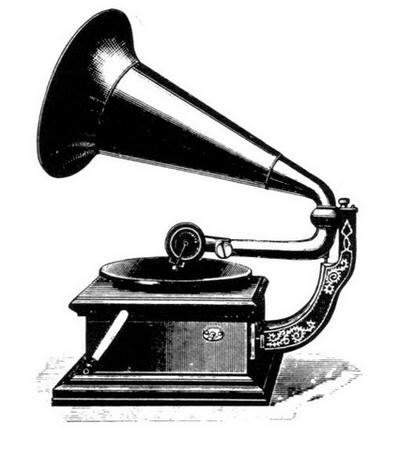
A turn-of-the-century mp3 player.

A turn-of-the-century mp3 player.

Of course, if you’re a student or university employee, you have space available on your drive. But I’ve never played with that space and I’m much more of a storytelling and journalism guy than a tech guy, so even with a lot of coaching I was about to tear my hair out. But I know that the folks at Google make it ridiculously simple to do things that would have required all-nighters and copious quantities of caffeine to produce back when I was an undergrad. And as it happens, Fortunately, I ran across this great post over at the Journo Tech blog called “Using Google Drive as a Web Host.”

Really, this is a brilliant solution. It’s cheap, it’s easy, and I get to keep all my hair now. As a sample, I’ve posted a quick-and-dirty slideshow I created using SoundSlides to merge photos of magazine covers from a research project about a magazine I’ve come to think of as the antebellum South’s version of The Economist: De Bow’s Review. It’s nothing fancy: just 11 photos of covers of the magazine from just before the Civil War. I shot the photos at the Special Collections and Archives section at Ralph B. Draughon Library at Auburn University last summer for an article that’s just been published this week by American Journalism. As for the music, a scratchy turn-of-the-twentieth-century recording of the Neapolitan Trio performing Stephen Foster’s “My Old Kentucky Home,” that one’s used under Creative Commons License. I obtained it at Free Music Archive, which is an outstanding resource for historical music that is so old it has passed out of copyright and into the public domain. Word to my students: You can get into big legal trouble if you violate copyright. There are so many who have pirated downloaded music that it’s hard for the recording industry to keep up with all of them, so its default position often seems to be to simply give up. But as a content creator online, you are MUCH more visible to them. As in, when you link to their stuff, it’s like Frodo putting on the One Ring and attracting the gaze of Sauron. So be careful what you use, because you might get a cease-and-desist letter (at best) or a hefty bill (at worst).

If you’re interested in Old South journalism history, you might want to give it a look here. It’s titled “Brave Old Spaniards and Indolent Mexicans: J. Ross Browne, Harper’s New Monthly Magazine, and the Social Construction of Off-Whiteness in the 1860s.

Just a side note to my brothers and sisters in the world of journalism and mass communication history: Soundslides is not that complicated to master. You could easily record your own narration about your research project to accompany the slides, or you can tuck the information that would go into your narration down into the captions and let the music serve to create a feel for the time period. Yeah, I know. If you’re like me, you have a stack of papers to grade and a research agenda to pursue. But multimedia has power to make what we do accessible to people who might otherwise not pay much attention.
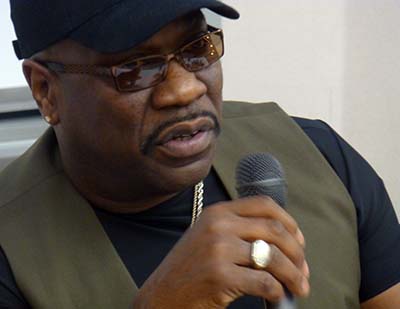
Big Bill Morganfield listens to a student's question March 3 at Auburn University's Harbert College of Business, where he discussed the music business with several dozen students, professors and blues fans from the Auburn community.

Big Bill Morganfield listens to a student’s question March 3 at Auburn University’s Harbert College of Business, where he discussed the music business with several dozen students, professors and blues fans from the Auburn community.

Big Bill Morganfield isn’t just any bluesman. He’s the son of Muddy Waters, aka McKinley Morganfield, and an Auburn University alumnus.* And he’s well aware that as much as the blues is an art form and a yearning, it’s a business.

That business includes using the tools of the Web and Web 2.0  to reach out. I sat in on his rap session with business students, professors from a variety of disciplines, and blues lovers from the Auburn community tonight at Auburn’s Harbert College of Business. His main messages were about loving what you do, protecting your ability to continue making money off doing it, and being genuine in all phases of your work.

You have to have a good team to work with. That includes the sidemen he picks out, the lawyer who protects his intellectual property rights (he said he’d looked at so many Digital Millennium Copyright Act cease-and-desist forms that he couldn’t even count them anymore), and a publicist.

His communication effort includes a pretty killer website where he controls the narrative about himself, keeps people up to date on what he’s up to, and sells his own music for download or ordering for delivery via snail mail. And he told me after his speaking gig tonight, as he walked out of the building while I finished up some tweets about him, that his publicist had sold him on the power of social media.

Of course, you have to have content that’s worth promoting. Morganfield knows this.

“A lot of people make the mistake of chasing after the dollars,” he said. “When you do that, if they’re blowing away from you and you go after them, you’re only going to get a few. What you want to do is go after the dollars blowing toward you. The way to do that is to get so good, they have to pay you.”

One last note: The last time I bought a blues album was just last summer, but I must admit it could now be classified as an oldie: John Lee Hooker’s “The Healer.” The last one before that was Ali Farkha Toure and Ry Cooder’s collaboration “Talking Timbuktu.” Before that, it was probably R. L. Burnside’s “A Ass Pocket of Whiskey.” But I’m certain the next one will be by Big Bill Morganfield.

*I’m proud to say he got his bachelor’s from Auburn in communication, though I can’t claim to have played a part in that since 1) I wasn’t here then and 2) I don’t think the journalism program and the communication program had yet merged. It’s also very cool that he got a bachelor’s degree in English from the Tuskegee Institute, just down the road a good piece.

The audio slideshow was the first truly multimedia storytelling form in the world of online news. It originated in newspaper newsrooms at the beginning of the Internet era in the 1990s. As we work from learning to use the simple Web 2.0 story form (blogging on WordPress) toward the most complex (creating video stories), students in JRNL 3510 this week are completing their 10-picture photo galleries on their blogs, complete with captions. Audio slideshows are the logical next step after this assignment.

Our next major assignment in Multimedia Journalism will be an audio slideshow created in SoundSlides. An audio slideshow consists of still photos and audio. The highly recommended audio recording gear for this assignment is the Zoom H1 Handy Recorder. It’s lightweight, but it provides excellent sound quality and reasonably fine input control for the mobile journalist. AmazonB&H Photo and New Egg have them for between $95 and $100. I’ve had great luck with all three vendors.

As one might logically assume, photojournalists were the pioneers of the audio slideshow. Because they were mostly visual thinkers and not audio producers, photojournalists’ earliest audio slideshows typically used one continuous interview clip, a single linear narration recorded by the photos’ creator, or a song as an audio “backdrop” for their stories. This was an important step toward integrating visuals with sound. But in its early stages, the audio slideshow often consisted of two separate stories on slightly different tracks: one visual, the other audio. One complemented the other, but they didn’t tell the same story simultaneously. Our goal is to develop integrated stories in which the audio track speaks about or provided context for the visuals simultaneously visible onscreen.

Thus, the audio slideshows we create will use some of the logic of writing for TV. In a television voiceover script (or VO), producers use the SWAP method: Synchronize words and pictures.That’s what you’re going for here: The audio track could stand by itself. Or the sequence of photos with captions could stand by itself. But the voices and sounds in the audio track must be relevant to each of the images onscreen while the audio track can be hears. Sound and images sync together.

The best way to understand this story form is to view and listen to great examples. Here are a variety of them from major news sites, including the British Broadcasting Corp., The Guardian, Australian Broadcasting Corp., and the New York Times. They come from Maureen Fisher’s list of examples on a class blog at Temple University.

BBC
A Surgeon in Somalia

The Dog and the Whale

Down the Local

THE GUARDIAN (UK)
All Round the Houses: Confessions of a Milkman

Disappearing Acts: Turning a Bowl on a Pole Lathe

AUSTRALIAN BROADCASTING COMPANY
The Mobile Nurse: Rebecca Wilner

Skulls, Strings and Philosophy: An Exploration into the Life of a Tattoo Artist

NEW YORK TIMES
Mulch Fest

Cut in Half

Burlesque Art

Kitten Rescue

I’ve already distributed this assignment via class email, but here it is online as well. Your assignment is to critique two audio slideshows that inspire you. Your post must meet each of the following requirements to receive full credit:

  1. They must be relevant to your blog topic.
  2. They must have captions on all photos.
  3. Provide their titles. In the titles, link to them using inline links. Don’t just type the URL in your post. It’s unprofessional.
  4. Identify the people who created them. Include the name of their news organizations.
  5. Briefly describe and critique their content. How well do they synchronize sound with pictures? Is each image onscreen long enough for you to “read” the image? Or are they up for too short of a time? How well are the captions written? Use “Writing photo cutlines (aka captions).pdf” as your guide to good captions.
  6. Briefly explain the journalistic value in their content.
  7. Explain what you find inspiring about them.
  8. Ask your readers a question related to the content in one or more of the slideshows you identify.
  9. Assign categories and tags to your post.

Deadline: Post by 5 p.m. Monday, Feb. 24. Email link to your post mjf0009@auburn.edu

Example of the kind of slideshow I want you to write about:
The Girl in the Window: Danielle, 6, was rescued from unfathomable living conditions. Can the love and care of her adoptive family compensate for a lifetime of neglect? An audio slideshow by the Tampa Bay Tribune.

Some good places to find audio slideshows to critique:
New York Times Multimedia/Photos page online: The Times has wonderful examples of audio wedded to beautiful photography with excellent captions. But be careful what you pick here; lots of simple slideshows with just photos and captions live here. For this assignment, please remember that you must critique slideshows that have audio tracks as well as captions for each photo. A Google advanced search can help you find that.*

National Geographic: I’ve written it before and I’ll write it again: This is the gold standard for technically excellent and vibrant photography.

Online News Association Social Shares: Top Audio/Photo Slideshows:  It’s only appropriate to tap the wisdom of a very wise ONA crowd to locate the best multimedia journalism content online. If you go here, for this assignment, be sure to pick a photo slideshow. Do not pick video to write about; video will be the subject of your third mandatory critique blog post.

Jedi search tip for finding audio slideshows: You can also do the following search in Google to narrow the search results to nothing but audio slideshows on a given site by searching for the exact phrase “audio slideshow” and the word “site” followed by a colon and a url. Example of what to type in the Google search window: “audio slideshow” site:www.nytimes.com

Melita Garza

Melita Garza’s work on Latin American culture in media

Rahul Mitra

I study organizational communication and the environment. (Mainly.)

MEL COULSON

What I think, What I do, Who I am

Marc Hemingway

Trying to keep track of my life (and my life on track)

Auburn Baseball Blog

Auburn starts the year with a new coach and a new direction and focus to win.

Overriding Ordinary

"Society is unity in diversity." -George H. Mead

The Changing Newsroom

New Media. Enduring Values.

Ed Mooney Photography

The official blog of Ed Mooney Photography. Dad of 3, Photographer, Blogger, Powerlifter. Exploring the historical sites of Ireland.

In Flow with Otto

Creativity is within us all

participation2011

NYU/Topics in Media Criticism

The Press and The Bench

Interaction between the media and the courts

The Buttry Diary

Steve Buttry, Dearly Departed Husband, Father and Grandfather. Former Director of Student Media, LSU's Manship School of Mass Communication

Theme Showcase

Find the perfect theme for your blog.

Auburn Campus Trends

The latest trends around Auburn, from fashion, to hot spots, to food.

Trending In Bama

All Things Happening In Alabama

Off the Vine

Life is too short to drink bad wine

AUact

What to do in Auburn after football season

Ripping Culture

Art by Derek Herscovici

Project Light to Life

A bucket list blog: exploring happiness, growth, and the world.

Scott Priz, Dog Reporter!

Reporting on the important things- The Dogs I meet!

SSND Live

Updates from the College News Design Contest

Appetites in Auburn

Experiencing life one meal at a time

A Taste of the Plains

Taking a look at local restaurants in Auburn and Opelika.

A Foreigner on Your Own Soil

When "y'all" meets "youse guys:" An exploration of why Northerners and Southerners don't coexist in sweet tea bliss

Culture Crazed

Finding color in unexpected places

Derencz's Corner

A glimpse inside the mind of a college journalist

Joy Mayer

JOURNALISM + COMMUNITY

ACADEME BLOG

The blog of Academe magazine

Discover WordPress

A daily selection of the best content published on WordPress, collected for you by humans who love to read.

Spirit, Word, Art

Lectionary-based creative spiritual direction

Cash or Charge

Adventures in Retail's Front Line from one of america's underemployed