Archives for category: Journalism

The audio slideshow was the first truly multimedia storytelling form in the world of online news. It originated in newspaper newsrooms at the beginning of the Internet era in the 1990s. As we work from learning to use the simple Web 2.0 story form (blogging on WordPress) toward the most complex (creating video stories), students in JRNL 3510 this week are completing their 10-picture photo galleries on their blogs, complete with captions. Audio slideshows are the logical next step after this assignment.

Our next major assignment in Multimedia Journalism will be an audio slideshow created in SoundSlides. An audio slideshow consists of still photos and audio. The highly recommended audio recording gear for this assignment is the Zoom H1 Handy Recorder. It’s lightweight, but it provides excellent sound quality and reasonably fine input control for the mobile journalist. AmazonB&H Photo and New Egg have them for between $95 and $100. I’ve had great luck with all three vendors.

As one might logically assume, photojournalists were the pioneers of the audio slideshow. Because they were mostly visual thinkers and not audio producers, photojournalists’ earliest audio slideshows typically used one continuous interview clip, a single linear narration recorded by the photos’ creator, or a song as an audio “backdrop” for their stories. This was an important step toward integrating visuals with sound. But in its early stages, the audio slideshow often consisted of two separate stories on slightly different tracks: one visual, the other audio. One complemented the other, but they didn’t tell the same story simultaneously. Our goal is to develop integrated stories in which the audio track speaks about or provided context for the visuals simultaneously visible onscreen.

Thus, the audio slideshows we create will use some of the logic of writing for TV. In a television voiceover script (or VO), producers use the SWAP method: Synchronize words and pictures.That’s what you’re going for here: The audio track could stand by itself. Or the sequence of photos with captions could stand by itself. But the voices and sounds in the audio track must be relevant to each of the images onscreen while the audio track can be hears. Sound and images sync together.

The best way to understand this story form is to view and listen to great examples. Here are a variety of them from major news sites, including the British Broadcasting Corp., The Guardian, Australian Broadcasting Corp., and the New York Times. They come from Maureen Fisher’s list of examples on a class blog at Temple University.

BBC
A Surgeon in Somalia

The Dog and the Whale

Down the Local

THE GUARDIAN (UK)
All Round the Houses: Confessions of a Milkman

Disappearing Acts: Turning a Bowl on a Pole Lathe

AUSTRALIAN BROADCASTING COMPANY
The Mobile Nurse: Rebecca Wilner

Skulls, Strings and Philosophy: An Exploration into the Life of a Tattoo Artist

NEW YORK TIMES
Mulch Fest
Cut in Half

Burlesque Art

Kitten Rescue

It’s frustrating as all get-out that NBC isn’t providing live coverage of the opening ceremonies of the Sochi Olympics. I’m sure I have that in common with millions. But three news outlets’ live blogs are giving us what the network refuses to provide.

These are my three favorites at this moment in case you just can’t wait to watch tonight:

  • The Guardian: The place to look for thoughtful and cheeky commentary and vibrant photography. Location: United Kingdom.
  • New York Times: Look no further for a rapidly updated streaming photo gallery coupled with meatier posts by a variety of NYT staffers. A classic American new media approach to the Sochi Winter Olympics.
  • Wall Street Journal: It’s terse. It’s rapid. It’s informative. Feels more like a microblog (which is what Twitter is for), but concentrated in one place. Seems more optimized for maximizing hits for WSJ.com than for fitting the audience’s needs, but hey, it’s a business! And WSJ is all about the Benjamins (well, more like the Salmon P. Chases), yes?
  • NPR: National Public Radio’s live blog from Sochi is wonderfully descriptive and quickly updates. The emphasis is more on writing that appeals to the senses than photography. It feels very much like radio voices translated to text, and it works. I’m constantly telling my reporting students the advice Charles Kuralt’s blind editor early in his career gave him: “Make me see it!” NPR’s writing embodies that advice.

Let the Games begin!

I used to think it was laughable how two inches of snow could paralyze the cities of the South. That was before I moved here in 2007. The Northerner in me just thought people here weren’t tough enough to deal with icy weather. Toughness has little to do with it, as I have learned from a number of blogs by observers in Atlanta and Birmingham who are providing the view from Ground Zero of the Snowpocalypse.*

Preparedness is the key. The lay of the land and a relatively warm climate make ice and snow so rare that the infrastructure for clearing the roads, such as ice and sand trucks, county snowplows and abundant independent contractors with snowblades mounted on the fronts of their pickups, simply does not exist. As a result, we’re about to have our third snow day at Auburn University, where students flocked to campus for snowball fights and the novelty of tossing flying discs in snow. The cancellations are wise. They demonstrate an abundance of caution that was absent in Atlanta, where ice-induced paralysis has become a national news story. Among the stories in the blogosphere about the Deep South’s slow-motion transportation disaster:

Meanwhile in Alabama, which the national news media have overlooked, bloggers told our stories:

These writers are helping us make sense of our current paralysis and revealing the stories of everyday heroes. They are connecting us to one another, and they are explaining us to the outside world. Things will thaw in a few days, and we’ll be back to normal again. When disaster strikes, we pull together and help each other out, and we give each other consolation and comfort.

Folks in the Kansas countryside where I grew up did (and do) the same. Our geography is different, but maybe deep down we’re not all so different after all. Here’s hoping the spirit of connection this storm has sparked in us continues past the thaw.

* Question: Should it be the Snowpocalypse, Snowmageddon, or some other label? I’m going with Snowpocalypse since its namesake, the Apocalypse, is foretold to bring natural disasters as well as the Four Horsemen of conquest, war, famine and death. That contrasts with Armageddon, the site of the gathering of armies for the final battle during the End Times in which Christ triumphs over Satan and his followers. But I digress.

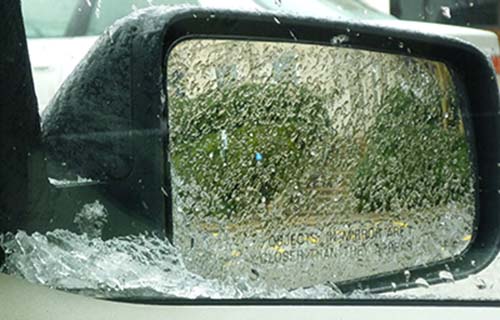
Temps right around freezing left a bit less than a quarter-inch of ice on cars Tuesday morning in Auburn. Come afternoon, the snow started to fall, hiding the danger from drivers.

Temps right around freezing left a bit less than a quarter-inch of ice on cars Tuesday morning in Auburn. Come afternoon, the snow started to fall, hiding the danger from drivers.

I only really started to get interested in the techniques of photojournalism when I was at one of the great news organizations for visual journalism, The Santa Fe New Mexican. I won some news page design awards there, but it was really press photographers like Abel Uribe and Craig Fritz who deserve the credit for making it such a gorgeous and at times visually stunning paper. The light in their work was just spectacular. The following piece demystifies the process.
Jim Richardson on Photographing in Available Light — National Geographic.

Melita Garza

Melita Garza’s work on Latin American culture in media

Rahul Mitra

I study organizational communication and the environment. (Mainly.)

MEL COULSON

What I think, What I do, Who I am

Marc Hemingway

Trying to keep track of my life (and my life on track)

Auburn Baseball Blog

Auburn starts the year with a new coach and a new direction and focus to win.

Overriding Ordinary

"Society is unity in diversity." -George H. Mead

The Changing Newsroom

New Media. Enduring Values.

Ed Mooney Photography

The official blog of Ed Mooney Photography. Dad of 3, Photographer, Blogger, Powerlifter. Exploring the historical sites of Ireland.

In Flow with Otto

Creativity is within us all

participation2011

NYU/Topics in Media Criticism

The Press and The Bench

Interaction between the media and the courts

The Buttry Diary

Steve Buttry, Dearly Departed Husband, Father and Grandfather. Former Director of Student Media, LSU's Manship School of Mass Communication

Theme Showcase

Find the perfect theme for your blog.

Auburn Campus Trends

The latest trends around Auburn, from fashion, to hot spots, to food.

Trending In Bama

All Things Happening In Alabama

Off the Vine

Life is too short to drink bad wine

AUact

What to do in Auburn after football season

Ripping Culture

Art by Derek Herscovici

Project Light to Life

A bucket list blog: exploring happiness, growth, and the world.

Scott Priz, Dog Reporter!

Reporting on the important things- The Dogs I meet!

SSND Live

Updates from the College News Design Contest

Appetites in Auburn

Experiencing life one meal at a time

A Taste of the Plains

Taking a look at local restaurants in Auburn and Opelika.

A Foreigner on Your Own Soil

When "y'all" meets "youse guys:" An exploration of why Northerners and Southerners don't coexist in sweet tea bliss

Culture Crazed

Finding color in unexpected places

Derencz's Corner

A glimpse inside the mind of a college journalist

Joy Mayer

JOURNALISM + COMMUNITY

ACADEME BLOG

The blog of Academe magazine

Discover WordPress

A daily selection of the best content published on WordPress, collected for you by humans who love to read.

Spirit, Word, Art

Lectionary-based creative spiritual direction

Cash or Charge

Adventures in Retail's Front Line from one of america's underemployed