Archives for category: Journalism
Gosh Almighty, I hope this is the problem ...

Gosh Almighty, I hope this is the problem …

A Google Drive problem has vexed a student and me for the last 24 hours.

After preparing a really nicely done Soundslides presentation, my student emailed to say she was having trouble uploading the files to Google Drive. She followed all the steps in journotech.co.uk’s fantastic Using Google Drive as a Web Host post. Yet it would not allow her to upload folders inside the publish_to_web folder; whether with drag-and-drop or hitting the upload files button inside Drive, it just wasn’t letting it work.

She brought her laptop in and we looked at her files; they looked in order. We noticed that in Drive, the icon for her folders looked different than the one for my folders. When she clicked on the 400_300 and 600_450 files, they would not open. Mine, however, did in my Drive.

After beating our heads against the problem for about an hour (and after she showed her beautifully done audio slideshow to me on her computer), I conceded defeat with apologies for not being able to figure out the problem.

And it just kept nagging at me. I wrapped up some grading and returned to the problem, replicating the steps with a test upload on my Drive. And when I hit the upload button, the same thing happened to me: It would not let me load folders, only files.

I backed up a couple of steps. And that’s where I think I found the problem.

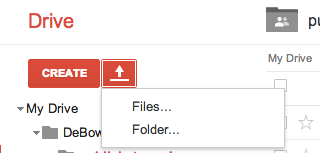
When you hit the little upload button, it asks if you want to upload a folder or files. I think if you click on it without noticing that option, Drive assumes you want to upload files. This time, I selected folder, then uploaded the contents of the publish_to_web folder. Then I clicked index.html, then hit preview.

The thing worked. Here it is (and it’s just a quick-and-dirty to demonstrate how to upload these things to Drive). To test whether that explains the incomplete preview of the Soundslide presentation, I tried uploading to Google Drive by just clicking the upload file indiscriminately; when I did so, Drive assumed I just wanted to upload files. Drive will upload either a folder that contains a bunch of stuff (it could have a mix of folders and files inside) if you use the “Upload>Folder” option. If you use “Upload>Files” and you point it inside a folder (like the publish_to_web folder) and try to select all the folders and files inside it, it will only upload the files. The result will be something that looks like this shell of a Soundslides project that I uploaded to test this theory.

I really hope this is the solution for my student. After this testing, I am certain it is.

Incidentally, these are the directions I gave in class before spring break for how to upload the projects:

INSTRUCTIONS FOR POSTING AUDIO SLIDESHOW TO YOUR BLOG

  1. In Soundslides, complete your slideshow and export it by using the EXPORT button. This creates a folder called publish_to_web that contains everything necessary for an online viewer to look at/hear your audio slideshow.
  2. Upload the contents of the entire publish_to_web to Google Drive. For directions, click through the galleries at the post “Using Google Drive as a Web Host” at this link: http://www.journotech.co.uk/using-google-drive-as-a-web-host/#more-587
  3. Write a blog post that explains the content of your story, including the title (this is the headline you gave it in Soundslides) and link to the publish_to_web folder you uploaded in Step 2 above. The link in Step 2 will explain what that link is.
  4. Email the link to the blog post containing the link to the audio slideshow to me at mjf0009@auburn.edu.
UNC Multimedia Bootcamp is where I got my first taste of journalistic documentary video storytelling. Not that this was my first video ever; I will confess to having made some terribly sophomoric sketch comedy using a video camera rented from the local mom-and-pop equivalent of Blockbuster Video back in the day.

While it wasn’t a boot camp in the “drop your *something* and grab your socks” kind of way, it definitely was a crash course. Remember that scene in Wayne’s World 2, where they had roadie training, and the veteran roadie who had bludgeoned a sweet shop owner to death with his own shoes to get brown M&M’s in order to get a band on stage was introducing himself? And he said, “You will hurt. You will have aches and pains. But you will get good.”

We got … well, competent enough after one week.

Afterward, I got a LOT of practice shooting a road trip to ancient Navajo and Hopi ruins in the Southwest with my father, an interview with a fascinating lady who is a muzzleloader shooting champion with a passion for creating Indian beadwork, and a piece on a mixed martial artist in Syracuse. So come to think of it, given the demands of producing research for academic presses on a regular basis, I’ve gotten more experience at this game than I thought.

UNC Multimedia Bootcamp is what got me up and running.

In just a week, we learned best practices for online video shooting and editing, basic html coding, interviewing for video and audio projects, and how all the elements of soundbites, natural sound, room tone, and voiceover-less editing combine with video footage to let the characters tell the story while the reporters stayed behind the camera or off to the side while conducting the interview.

We learned to become, as I tell my Multimedia Journalism students, Men in Black.

Our only presence is the standalone answers and reactions from interview subjects that we prompted with our carefully worded questions and by biting our tongues, smiling, nodding, and using the “dumb dog” expression while keeping our mouths shut and resisting the temptation to say, “Uh-huh … interesting … go on ….”

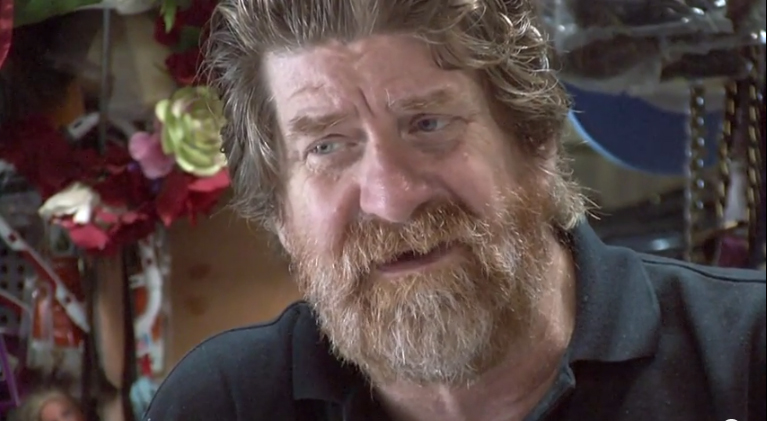
My assignment partner Tom Salyer, a freelance photographer from Miami, and I hit up a dozen businesses in downtown Chapel Hill and Carrboro, N.C., before we found someone willing to talk on camera and let us into their lives for a couple of hours of interviewing and B-roll filming.

This is the result.

Barry “Sid” Keith is just the best for letting us in. From one Tar Heel to another, thanks, Sid!

Barry "Sid" Keith's secondhand shop Sid's Surplus has been a fixture in downtown Carrboro, N.C., for decades.

Barry “Sid” Keith’s secondhand shop Sid’s Surplus has been a fixture in downtown Carrboro, N.C., for decades.

My friend Wasim Ahmad, who runs the Journographica blog, just shared a handy little piece on how misguided photographers often are in their use of flash and tips for how not to needlessly blind your subjects and waste your battery with it. I especially like the advice on using flash to keep from shooting useless silhouettes in backlit conditions and how to use flash to eliminate shadows in portraits. If you’re still learning to use your gear properly, it’s worth a look. Check it out: You’re Using Your Camera’s Flash Wrong.

Parkour athletes train on the decorative stone benches and walls beneath the opulent Shelby Engineering Center at Auburn University. The ruins of recently demolished Dunstan Hall lie in the background.

Parkour athletes train on the decorative stone benches and walls beneath the opulent Shelby Engineering Center at Auburn University. The ruins of recently demolished Dunstan Hall lie in the background.

First among the rules of photography I’ve emphasized in Multimedia Journalism is the Rule of Thirds, which I was studiously applying Tuesday afternoon after a day on campus as I composed an urban blightscape of the ruins of Dunstan Hall, which, along with some other buildings in the background and to the right in this image, is destined to become a parking garage. But then the unexpected happened. You’ll want to click the thumbnail to enlarge since it’s easy to miss at thumb size.

I had seen Parkour athletes training on utility boxes, stone walls by the parking deck at RBD Library, and other fixtures on campus. As the man in mid-somersault crossed along the bricks and pavement above the steps, I figured he’d just provide a sense of scale for the destruction behind him. And then, he began his run. About six strides along a loping curve led to his leap into the air, perhaps five feet high and 10 feet long, landing atop the oddly shaped stone bench from which he hurtled, tucked, spun tightly as if on a string, and stretched his arms to catch the top of the wall at the bottom of the frame.

It was a magnificent act, wholly unexpected, and perhaps as much a delight to me as to its executor. And it illustrated other key rules of photography beyond the Rule of Thirds:

  • F/8 and Be There: This saying admonishes us to not fixate so much on technical perfection so much as to be present and alert and mindful of the possibilities presented by the moment at hand. F/8 is the f-stop that provides optimal depth of field. OK, so my antiquated Droid2 smartphone’s camera has no such thing as f-stop settings. The key part, however is to BE THERE.
  • Capture the decisive moment: As the Top L Project blog points out, you have to be ready to capture the exact time when something great happens; without doing so, you risk losing your shot. Top L says to do this, you have to know your camera. In the moment, I saw our Parkour artist act abruptly. I knew from shooting baseball with low-grade gear that I had a split second to have a chance of capturing anything. I got lucky this time. But I have maybe hundreds of garbage frames from the Detroit Tigers at Spring Training last March and maybe two frames where the ball explodes off the bat or the ball is in the frame after a pitcher releases it. As Charles Bukowski wrote in a fight scene in “Barfly,” a guy gutted with a knife shouts at his attacker, “Damn luck, motherf*cker!” to which the assailant responded, “Yeah, but that counts, too!”
  • Use the light: I’m borrowing from Top L’s list here, but it’s so true: Photography is about the light. This shot didn’t have the greatest, on account of the cloud cover and the shadow of the massive Shelby Engineering Center buildings in which the action took place. I think the moment makes up for it, though, and being there. It could have been worse; it could have been harsh mid-day, overhead light. This was the hour before dusk when the photo took place, and the building shadows eliminated the advantage of shooting during the magic hour. And naturalistic documentary photography demands that you shoot things where they take place. No staging. Capture the moment, be there, and use what light is there. Available light is the key to being nonintrusive.

If only I had one of those sweet DSLR rigs that Canon so graciously loaned me at the National Press Photographers Association’s Multimedia Immersion last summer. I’m saving my pennies until the day comes to take the plunge. Suggestions for good gear are appreciated.

Melita Garza

Melita Garza’s work on Latin American culture in media

Rahul Mitra

I study organizational communication and the environment. (Mainly.)

MEL COULSON

What I think, What I do, Who I am

Marc Hemingway

Trying to keep track of my life (and my life on track)

Auburn Baseball Blog

Auburn starts the year with a new coach and a new direction and focus to win.

Overriding Ordinary

"Society is unity in diversity." -George H. Mead

The Changing Newsroom

New Media. Enduring Values.

Ed Mooney Photography

The official blog of Ed Mooney Photography. Dad of 3, Photographer, Blogger, Powerlifter. Exploring the historical sites of Ireland.

In Flow with Otto

Creativity is within us all

participation2011

NYU/Topics in Media Criticism

The Press and The Bench

Interaction between the media and the courts

The Buttry Diary

Steve Buttry, Dearly Departed Husband, Father and Grandfather. Former Director of Student Media, LSU's Manship School of Mass Communication

Theme Showcase

Find the perfect theme for your blog.

Auburn Campus Trends

The latest trends around Auburn, from fashion, to hot spots, to food.

Trending In Bama

All Things Happening In Alabama

Off the Vine

Life is too short to drink bad wine

AUact

What to do in Auburn after football season

Ripping Culture

Art by Derek Herscovici

Project Light to Life

A bucket list blog: exploring happiness, growth, and the world.

Scott Priz, Dog Reporter!

Reporting on the important things- The Dogs I meet!

SSND Live

Updates from the College News Design Contest

Appetites in Auburn

Experiencing life one meal at a time

A Taste of the Plains

Taking a look at local restaurants in Auburn and Opelika.

A Foreigner on Your Own Soil

When "y'all" meets "youse guys:" An exploration of why Northerners and Southerners don't coexist in sweet tea bliss

Culture Crazed

Finding color in unexpected places

Derencz's Corner

A glimpse inside the mind of a college journalist

Joy Mayer

JOURNALISM + COMMUNITY

ACADEME BLOG

The blog of Academe magazine

Discover WordPress

A daily selection of the best content published on WordPress, collected for you by humans who love to read.

Spirit, Word, Art

Lectionary-based creative spiritual direction

Cash or Charge

Adventures in Retail's Front Line from one of america's underemployed